Michèle Lamy championed AI fashion design in a Vanity Fair interview on April 10, 2026. The Rick Owens collaborator praised its role in generating novel patterns and textures. South Asian designers now adopt these tools for efficient, sustainable production.
Lamy's Vision for AI Fashion Design
Lamy described AI as a catalyst for fashion iconoclasm. Designers input sketches into tools like Midjourney or Adobe Firefly to create hybrid forms, she told Vanity Fair. This approach mirrors her avant-garde work with Owens.
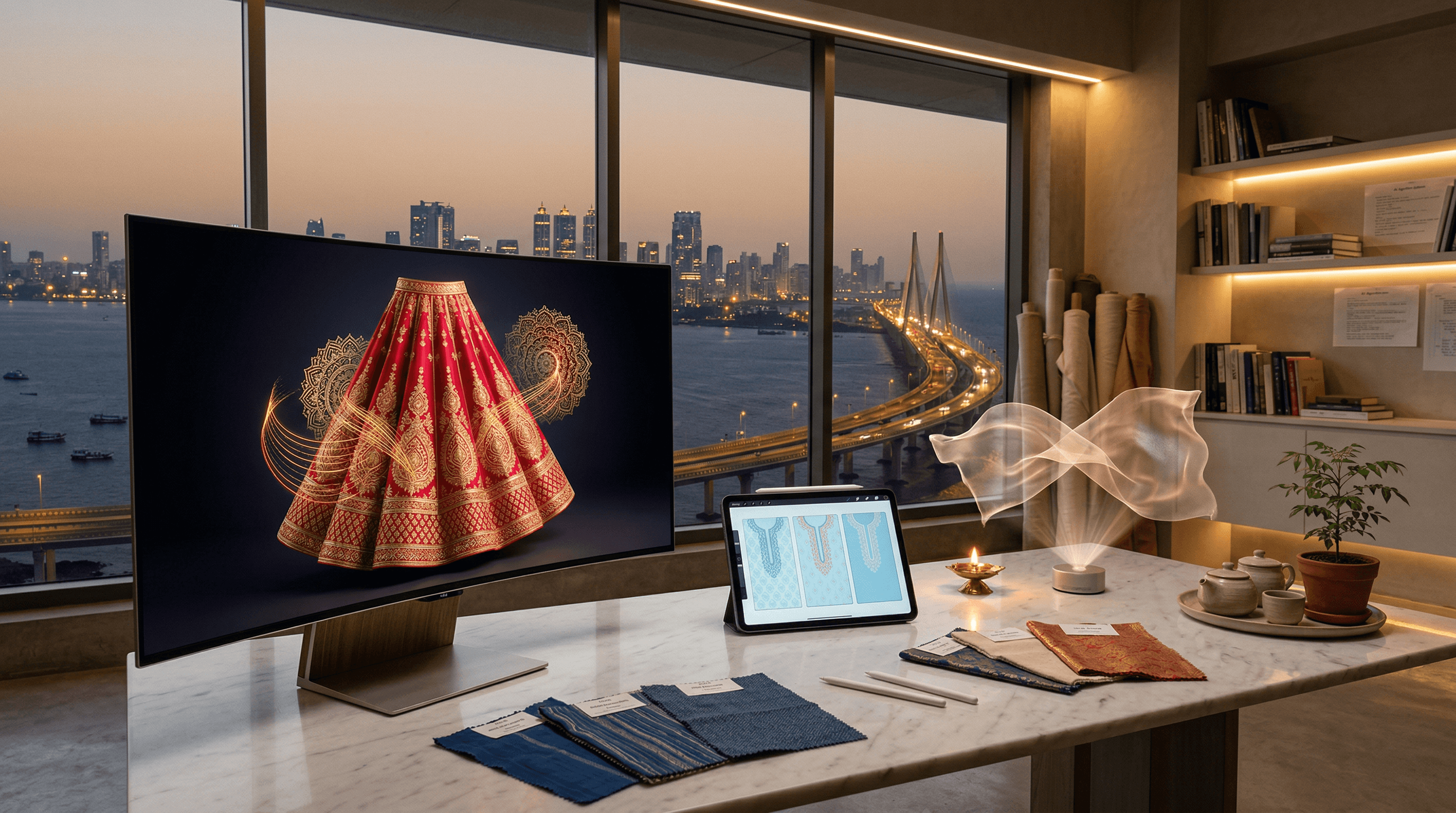
She highlighted AI's prototyping speed. Indian labels such as Raw Mango use it for intricate embroideries on Banarasi-inspired silks. Paris runways feature AI-influenced collections from Balenciaga and others.
These tools cut iteration cycles by 60%, according to a 2026 IIT Bombay study. This speed helps time-strapped ateliers gear up for FDCI India Couture Week. Such efficiency aligns with India's push for tech-enabled textile exports under DPIIT guidelines.
South Asian Brands Adopt AI Fashion Design
Indian designers apply AI to lehenga embroideries and kurta prints. Adobe Firefly generates motifs inspired by Banarasi weaves and Kanjeevaram silks. These textiles differ in gold zari density and silk fineness.
NITI Aayog's 2026 report notes 40% efficiency gains from AI adoption. Bangalore startup FashAI raised INR 120 crore (USD 14.4 million) for AI-driven custom wedding platforms integrated with Myntra and Ajio.
Mumbai ateliers deploy AI for Diwali collections. Chennai firms simulate Kanjeevaram drapes, accounting for 18-20 saree meters per bridal set. Brands like Doodlage refine dyeing algorithms, reducing fabric waste by 25%, per IIT Delhi's April 10, 2026, study.
These improvements lower GST-inclusive costs from 5-12% on fabrics. They boost D2C margins despite 12% import duties on synthetic fibers. E-commerce platforms like Nykaa Fashion see faster listings for AI-optimized festive wear.
Investment Surge in Fashion Tech
AI fashion investments reached INR 850 crore (USD 102 million) in Q1 2026, per Inc42 data. This figure exceeds traditional textile funding by 30%, according to Wazir Advisors. Delhi and Hyderabad now lead as innovation hubs.
Paytm Ventures backs AI pattern generators for SMEs. Early investors achieve 25% returns, reports YourStory. This capital accelerates supply chain digitization under PLI schemes, targeting 10% export growth.
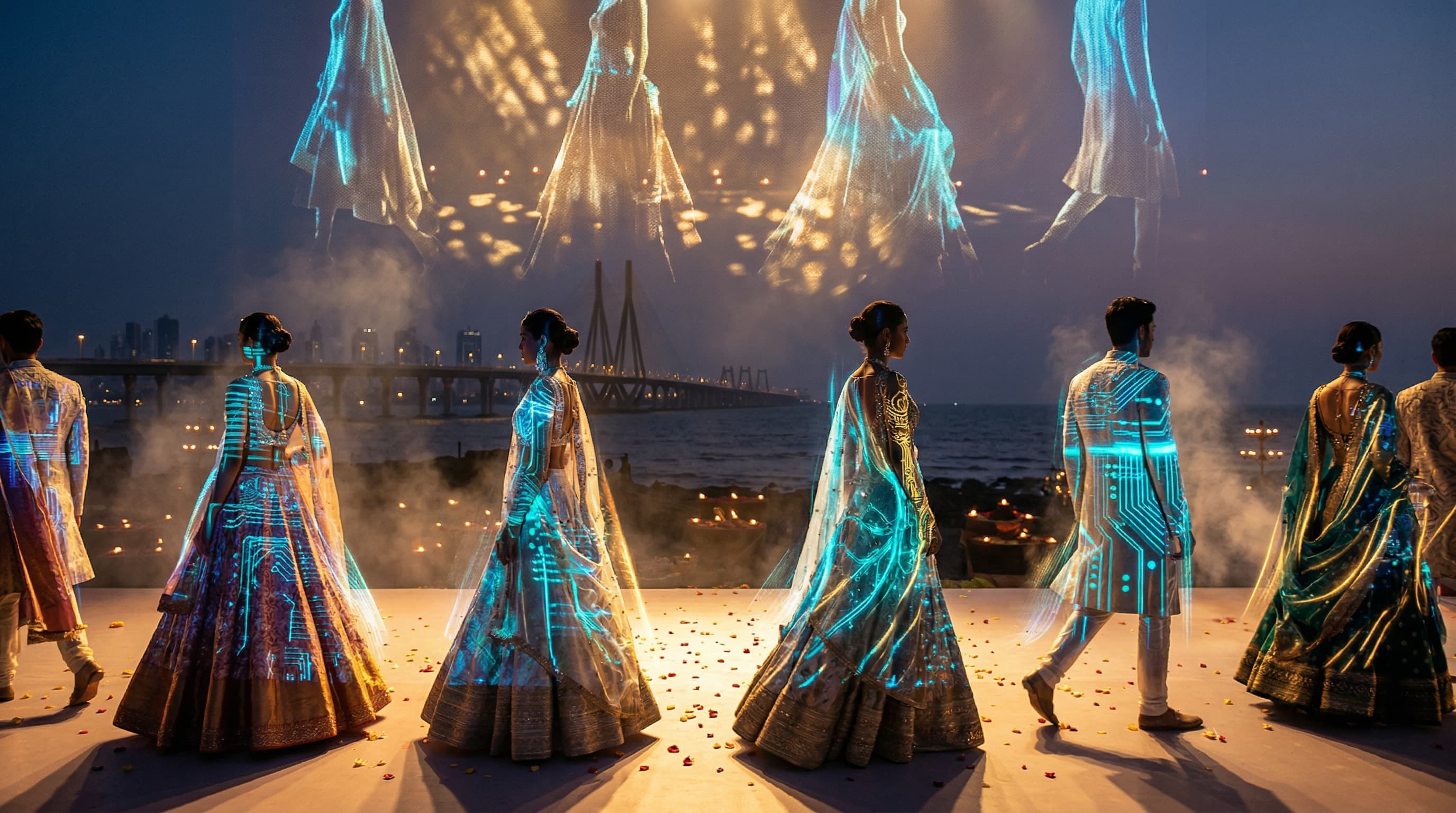
FDCI Lakme Fashion Week highlighted AI saree drapes by Anita Dongre. Her collections blend algorithms with Chanderi voiles (lightweight, 100s count) and Maheshwari cottons (crisper weaves). These innovations cut production costs by 15-20%.
Technopak projects INR 5,000 crore annual inflows by 2028, driven by DPIIT incentives and GST rebates for tech-integrated textiles.
Bollywood and Festive AI Designs
Deepika Padukone wore an AI-generated lehenga by Rahul Mishra at a Mumbai premiere on April 10, 2026. Hyderabad labels forecast Eid kurta trends using machine learning on Nykaa Fashion sales data.
Wedding season drives demand. AI generates 500 dupatta variants per client, reducing design time from weeks to days. This supports the INR 4.25 lakh crore bridal market, per CMAI estimates.
Ajio reports 35% YoY festive sales growth with AI-optimized inventory. Smart stocking avoids overstock GST penalties at 18%.
Challenges and Future of AI Fashion Design
Critics doubt AI's creativity. Lamy counters that humans direct tools to maintain cultural fidelity, such as Parsi Gara embroideries.
India aligns with EU AI Act via MeitY guidelines for export compliance. McKinsey's April 2026 report forecasts AI handling 35% of design tasks by 2028.
Jio Cloud provides compute at INR 0.50 per GPU hour, cheaper than AWS. Affordable access empowers SMEs.
South Asia balances innovation with tradition. AI fashion design cements India's leadership, merging heritage textiles with scalable business models and tech-finance synergies for long-term growth.