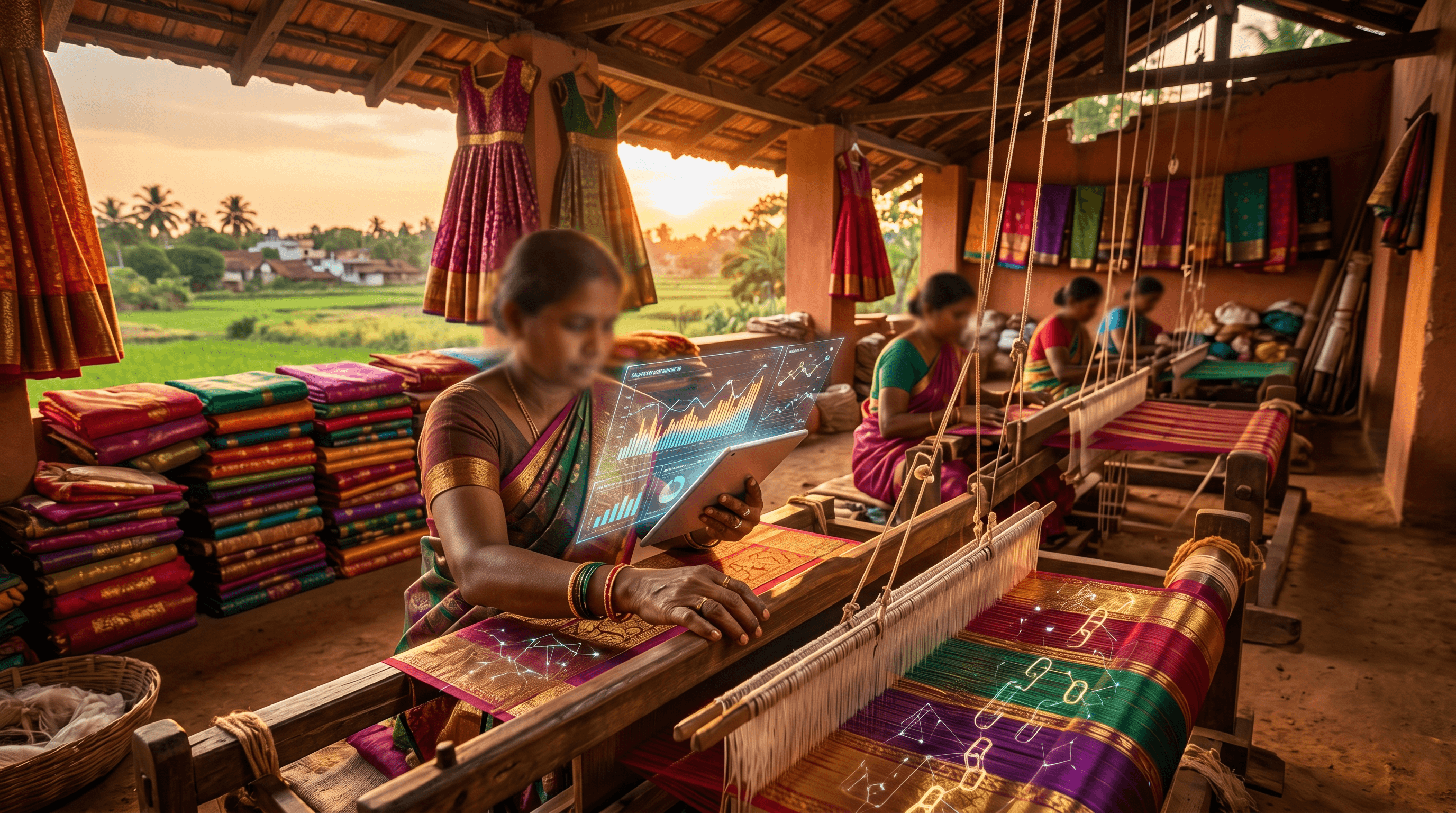
DataWeave India launched OpenChain AI on April 11, 2026, to drive fashion supply chain equity. The blockchain platform delivers real-time market data to South Asian artisans. It boosts incomes and cuts poverty in textile hubs.
India's textile sector employs 45 million, but artisans earn just 10% of export value (CMAI, FY26). OpenChain addresses this gap.
Platform Mechanics
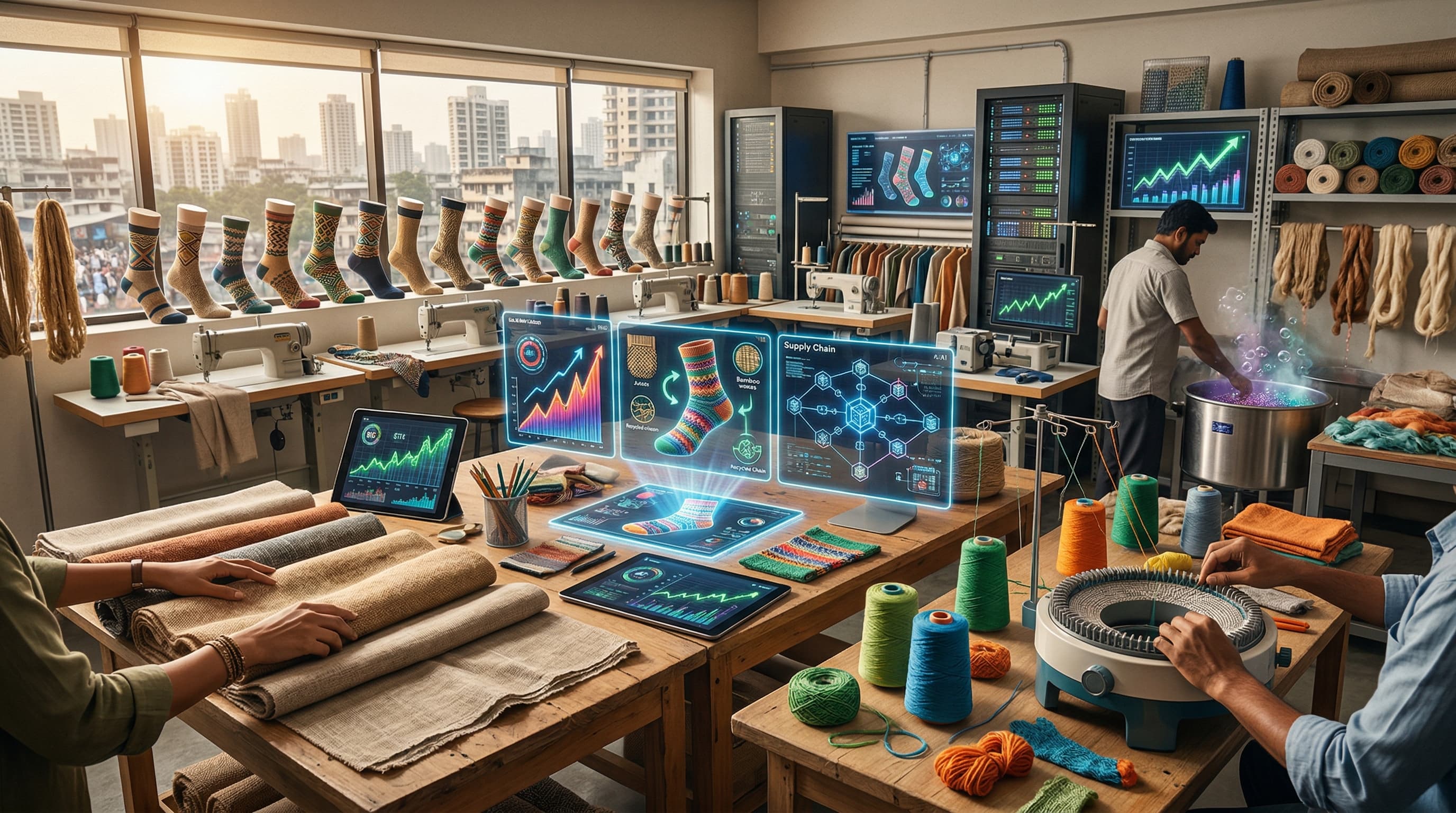
OpenChain AI pulls data from Myntra, Ajio, Nykaa Fashion, and global sites like Shein. Blockchain verifies transactions to prevent fraud.
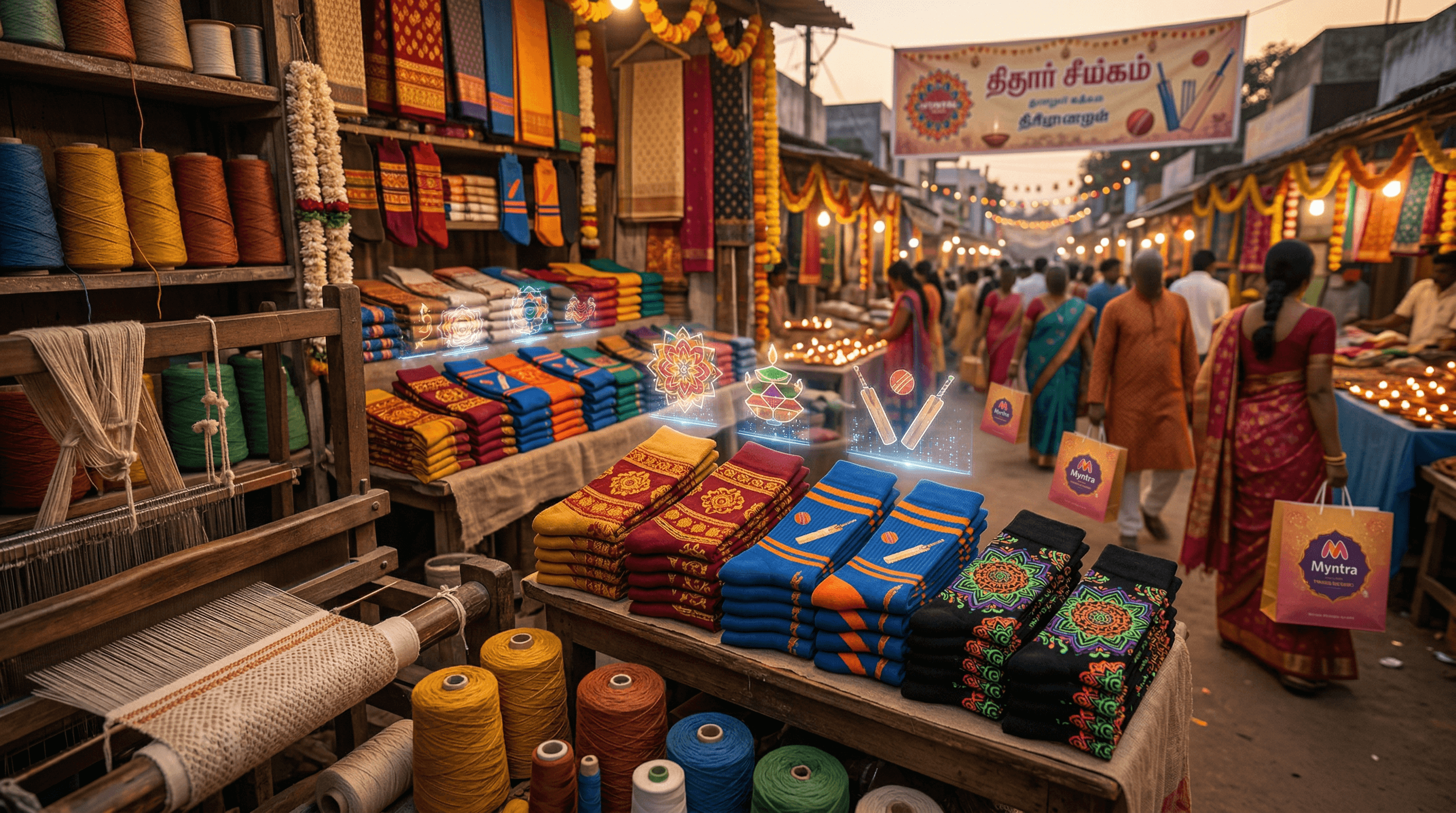
Artisans scan QR codes on Banarasi silks, Kanjeevaram sarees, or Chanderi dupattas via mobile apps. This traces origins and slashes middlemen by 40% (NITI Aayog study, April 2026).
Fintech partners like Paytm offer microloans at 8% interest based on verified sales data. 50,000 users joined on launch day (DataWeave metrics).
Paytm integration supports RBI's digital lending push and PLI scheme for textiles.
Poverty Impact in South Asia
Extreme poverty affects 15% of South Asian garment workers (World Bank, 2026). Kanchipuram weavers forecast Diwali lehenga demand accurately.
They stock efficiently, cut waste by 20%, and lift incomes by INR 5,000 ($60) monthly (BRAC report, April 2026). Bangladesh jamdani weavers match Eid trends.
Women manage 60% of platform accounts, closing urban-rural divides in Mumbai, Delhi, and Dhaka.
India's handloom market reached INR 25,000 crore in FY26 (DPIIT). OpenChain delivers 10% income gains in pilots.
Tech Stack Breakdown
Ethereum-based smart contracts automate payments with fees under 1%. Blockchain ensures data integrity.
Google Cloud AI predicts trends like Bollywood kurtas six months ahead at 92% accuracy (DataWeave, April 11, 2026).
Tokenized credits reward data contributions. Stablecoins like USDC enable cross-border payouts, avoiding 18% GST forex fluctuations.
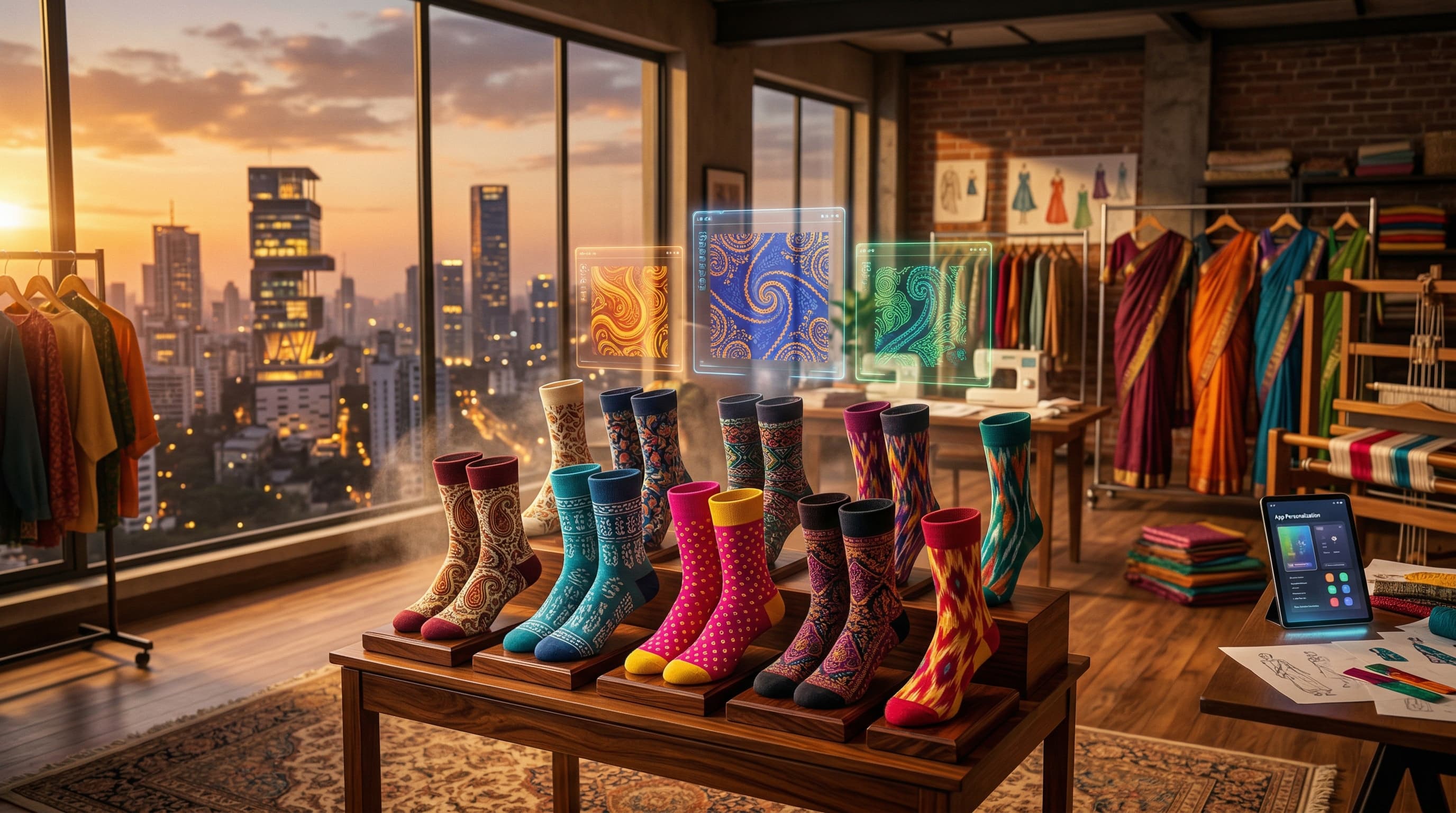
AI sizing tools boost D2C sales on Myntra by 15% in tests.
Finance and Investment
VCs invested INR 500 crore ($60 million) in DataWeave (CB Insights, April 2026). Investors target 20% ROI from equitable chains.
HDFC Bank partners for supply chain finance, disbursing INR 1,000 crore ($120 million) in loans. Defaults fell to 2% with verified data.
Bangladesh exporters save 15% on cross-border costs via stablecoins. This aids India's $40 billion textile export goal (Ministry of Textiles, 2026).
PLI incentives project 10% sector growth for tech-adopting SMEs.
Designer Adoption
Sabyasachi sources handlooms via OpenChain for verified authenticity. Wedding lehengas carry artisan tags.
Anita Dongre cut costs 30% and passed 10% bonuses to weavers (company statement, April 11, 2026). H&M pilots ethical sourcing in India.
Myntra's D2C sellers optimized ethnic wear inventory. Sales rose 18% quarter-on-quarter in wedding season (Myntra data, Q1 FY27).
Designers now prioritize data-backed ethics over opaque agents.
Regional Adaptations
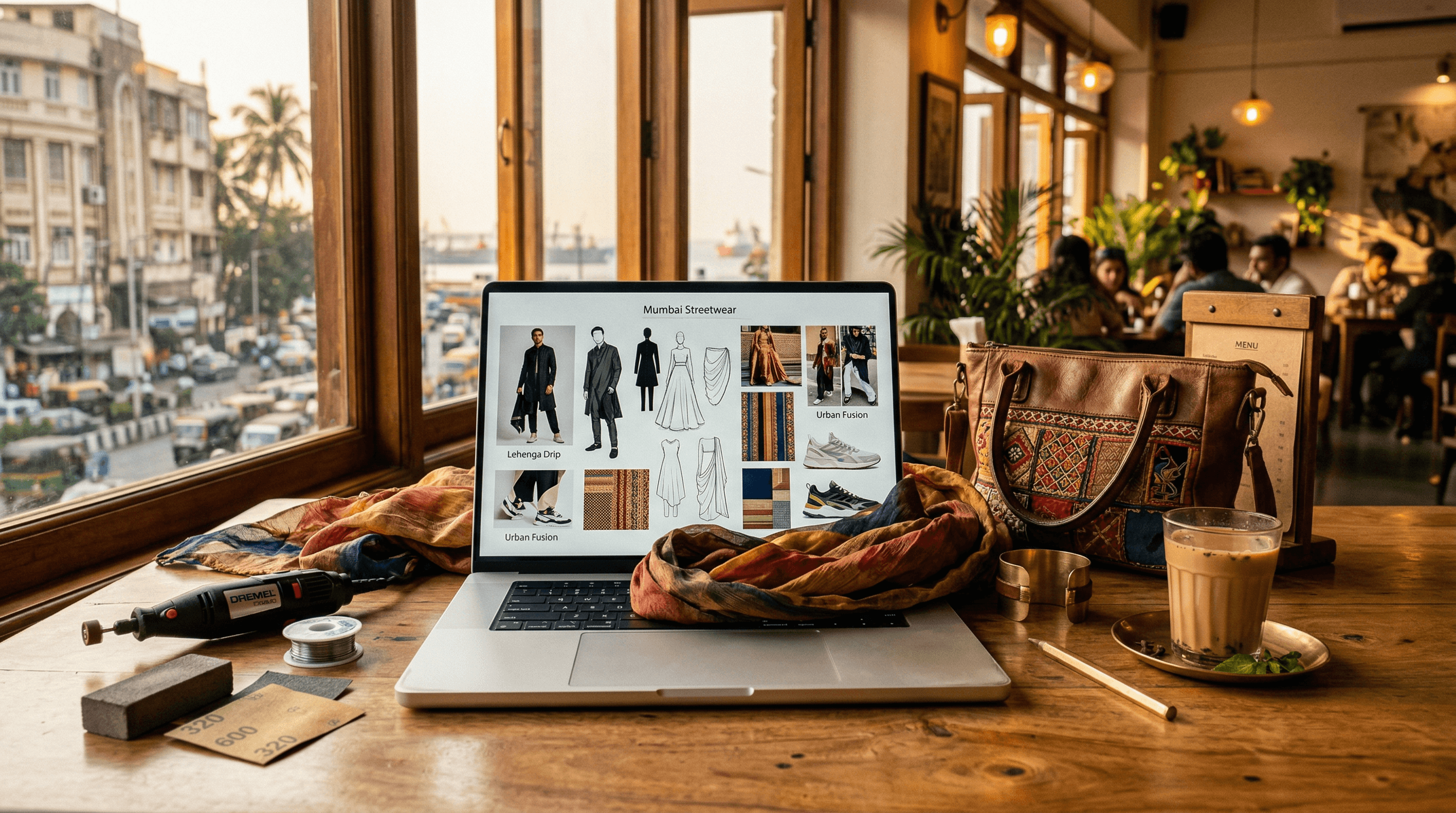
Mumbai tailors track indo-western data. Chennai weavers monitor Kanjeevaram prices daily. Colombo batik artists forecast tourist demand.
The platform supports Hindi, Tamil, Bengali, and Sinhala. Non-English interfaces drive 70% usage.
Ajio integrations tailor forecasts for Onam or Pongal peaks.
Challenges and Solutions
Data privacy uses GDPR-compliant encryption. Indian regulators audit monthly.
DataWeave trains 5,000 artisans weekly via WhatsApp videos. Adoption reaches 80% post-training.
AWS handles 1 million daily queries at 99.9% uptime. Scalability extends to leather and jewelry.
Path to Fashion Supply Chain Equity
DataWeave targets 1 million users by 2027. Fashion poverty could fall 10% (UNDP forecast, April 2026).
Stablecoins hedge rupee volatility. Real-time data access redefines Indian textiles, blending heritage with global tech.