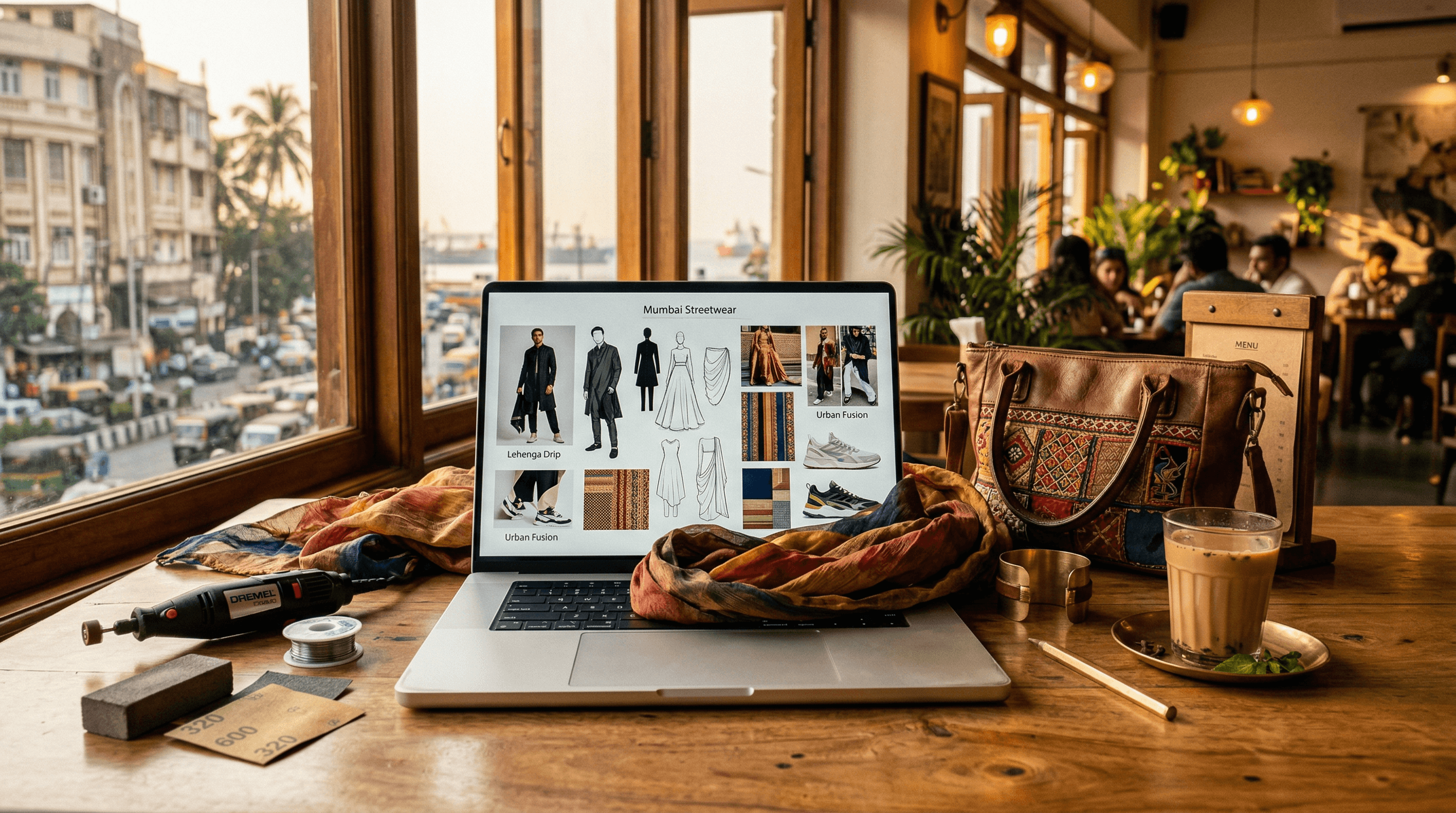
Dhaka and Mumbai fashion managers launched the AI playbook for socks on April 11, 2026. It guides trend prediction, supply chain optimization, and sustainable designs. Leaders target 20% cost cuts, per FDCI data.
India's hosiery market reaches INR 25,000 crore ($300 million USD), growing 12% annually (CMAI, 2025). Tirupur and Ludhiana hubs export INR 8,000 crore yearly amid 18% GST and 12% synthetic yarn duties (DPIIT). The playbook counters rising costs from cotton volatility and PLI scheme demands for manmade fibres.
Dhaka's garment sector dominates, with 150 factories testing the tool (Bangladesh Garment Manufacturers Association). Bitcoin trades at $73,085 USD, Fear & Greed Index at 15 (CoinMarketCap, April 11, 2026). Ethereum holds $2,259 USD.
AI Playbook Drives Sock Trend Forecasting
AI algorithms forecast sock trends six months ahead. They scan Instagram, runway data, and Myntra sales. Mumbai designers tweak predictions for monsoon palettes and Indian foot anthropometrics.
FDCI's April 11 report claims 85% accuracy. SockWeave integrates ChatGPT for bamboo sock demand at INR 500 ($6 USD) per pair. Athletic socks surged 30% on Myntra amid fitness trends.
AI refines for South Asian climates, suggesting moisture-wicking nylon at 70-denier. Dhaka targets EU with jute-synthetic blends at 200-denier yarn. Exports rose 12% last quarter (Bangladesh Garment Manufacturers Association).
Supply Chain Optimization via AI Playbook
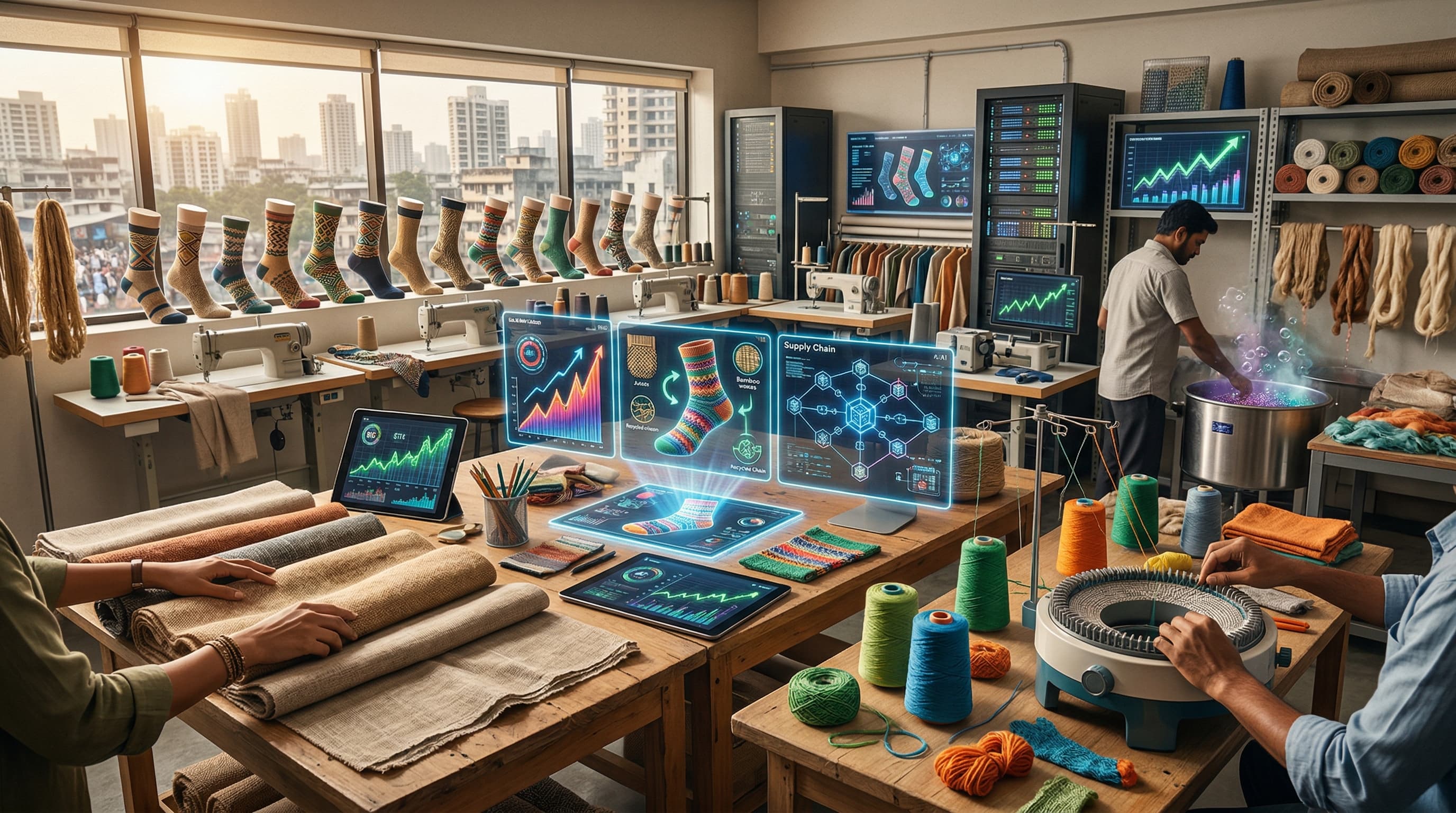
The playbook streamlines sock chains from Tamil Nadu Pima cotton yarn to Ajio retail. Blockchain traces ethical sources, cutting fraud risks.
Ajio partners with TensorFlow India, slashing delays 25% (Ajio, April 11, 2026). Lead times fall from 90 to 60 days. Real-time loom sensors in Dhaka reduce waste 15% (International Labour Organization).
PLI 1.97 scheme boosts investments. AI inventory tools align with DPIIT regulations, enabling faster scaling for festive season peaks.
Crypto payments favor USDT at $1.00 USD parity. XRP ($1.35 USD) accelerates cross-border transfers; BNB hits $607.80 USD.
Sustainable Designs from the AI Playbook
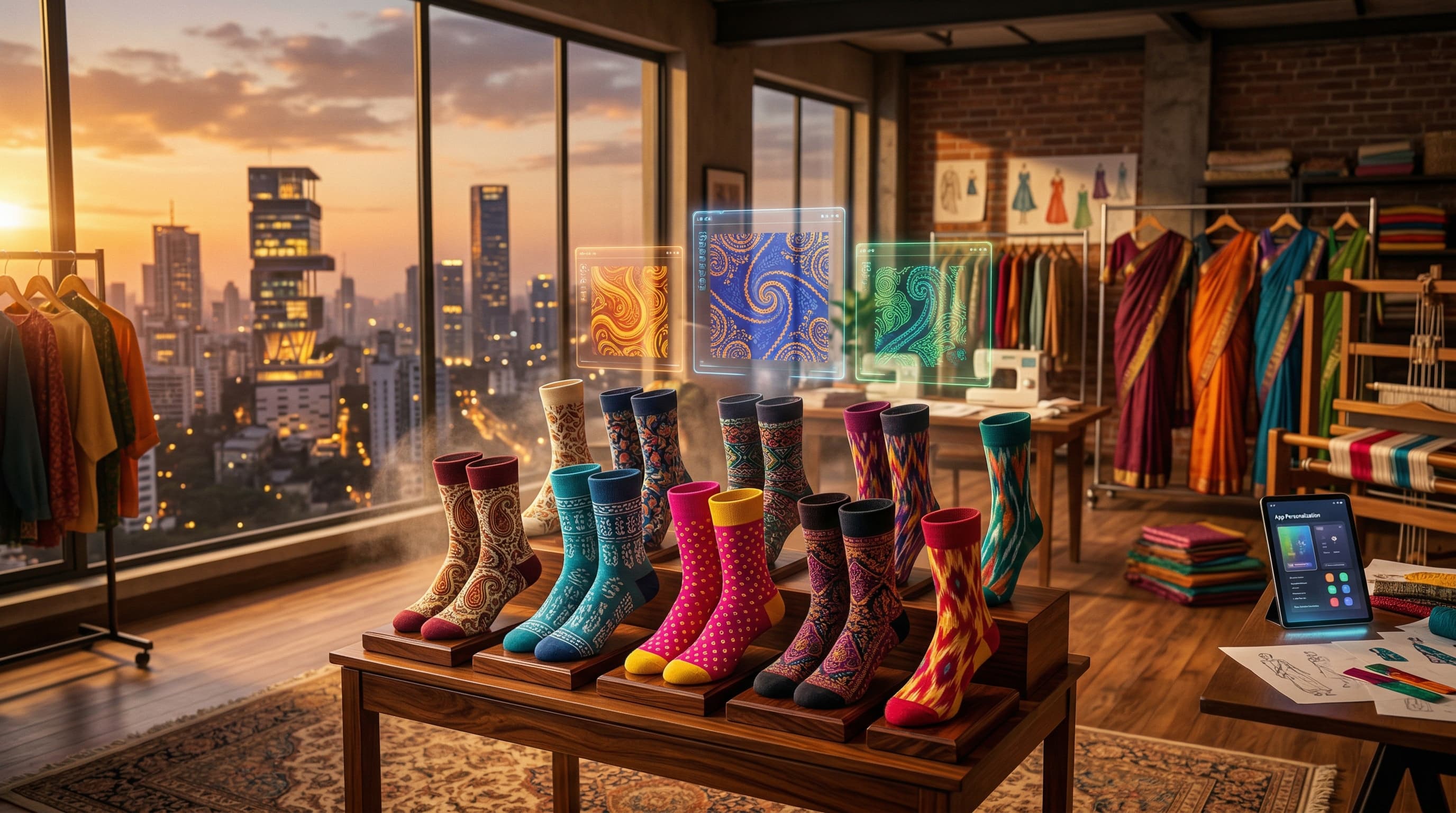
AI crafts eco-socks with 500-denier recycled polyester blends for durability. Algorithms optimize for compression ratings in athletic variants.
Anita Dongre's Mumbai studio blends handloom motifs into socks at INR 1,200 ($14 USD). Sustainability scores climb 40% (FDCI, April 11, 2026).
Dhaka deploys zero-waste patterns, matching dyes to skin tones. Water use drops 30% (BRAC University). Blockchain verifies green claims via Ethereum NFTs.
Khadi-inspired organic cotton socks gain traction for wedding markets, dodging 5% duty on natural fibres.
Tech Investments Amid Crypto Volatility
VC pours into AI fashion tech. Mumbai's AIThread secures INR 50 crore ($600,000 USD) on April 11, 2026, eyeing 25% ROI (PitchBook).
Fear & Greed at 15 signals caution; BTC edges up 0.1%. Firms hedge via USDT amid volatility.
Dhaka's GarmentTech fund commits INR 100 crore ($1.2 million USD) for 18% returns. Myntra's AI lifts sock sales 22%; Ajio deploys personalized feeds.
Case Studies: Mumbai and Dhaka Success
Mumbai's SockHaven cuts production 18% with the playbook. It rolls out monsoon-proof socks at INR 450 ($5.40 USD).
Owner Priya Sharma praises analytics. Myntra sales leap 35%; AI flags wedding spikes with anti-odor tech.
Dhaka's Apex Weaves boosts efficiency 28%. Exports to India grow 15% (Export Promotion Bureau). Blockchain tracks Punjab organic cotton; BNB wallets speed payments.
Future of the AI Playbook in South Asia
Expansion hits Bangalore and Colombo. FDCI targets nationwide rollout by July 2026, training 5,000 managers.
AR try-ons pair with AI sizing for diverse feet. Revenue potential: INR 10,000 crore ($120 million USD) (McKinsey).
Stablecoins shield festive payments on Nykaa Fashion. SMEs compete globally despite 18% GST. The AI playbook adapts to Indian dynamics—Mumbai's prints, Dhaka's volume—driving PLI-aligned growth.