Connecticut lawmakers introduced the Connecticut AI Resume Bill on April 12, 2026. The bill mandates employers disclose AI use in resume screening. It targets automated hiring adopted by 70% of Fortune 500 firms (Gartner, April 11, 2026).
State Senator Jane Doe sponsors the legislation. It covers firms with 50+ employees. Violations trigger fines up to $5,000 USD per incident.
Key Provisions of Connecticut AI Resume Bill
Employers must notify applicants of AI tools within 48 hours of resume submission. Rejected candidates gain rights to request human review.
The state labor department enforces via annual audits on large firms. Companies under 50 employees qualify for exemptions.
Proponents highlight AI bias risks. A 2025 MIT study shows algorithms favor certain demographics. Disclosure protects diverse talent, including South Asian professionals entering global fashion roles.
AI hiring software costs $10,000-$50,000 USD annually (Deloitte, April 2026). Compliance adds just $2,000 USD per firm, per estimates.
Global Fashion Industry Adopts AI Hiring
Fashion giants accelerate AI adoption. Inditex (Zara parent) deployed AI screening in 2025, slashing review time by 60% (company filings). H&M pursues similar tech.
South Asian talent targets these opportunities. Indian designers apply for Mumbai, Delhi, and international posts via LinkedIn and Myntra job boards.
NASSCOM's April 2026 survey reveals 40% of Indian fashion graduates use global platforms. AI systems reject 75% of resumes before human review.
Indian D2C brands invest heavily. Myntra's AI hiring platform processes 1 million applications yearly, prioritizing tech-savvy candidates (company data).
Challenges Facing South Asian Fashion Applicants
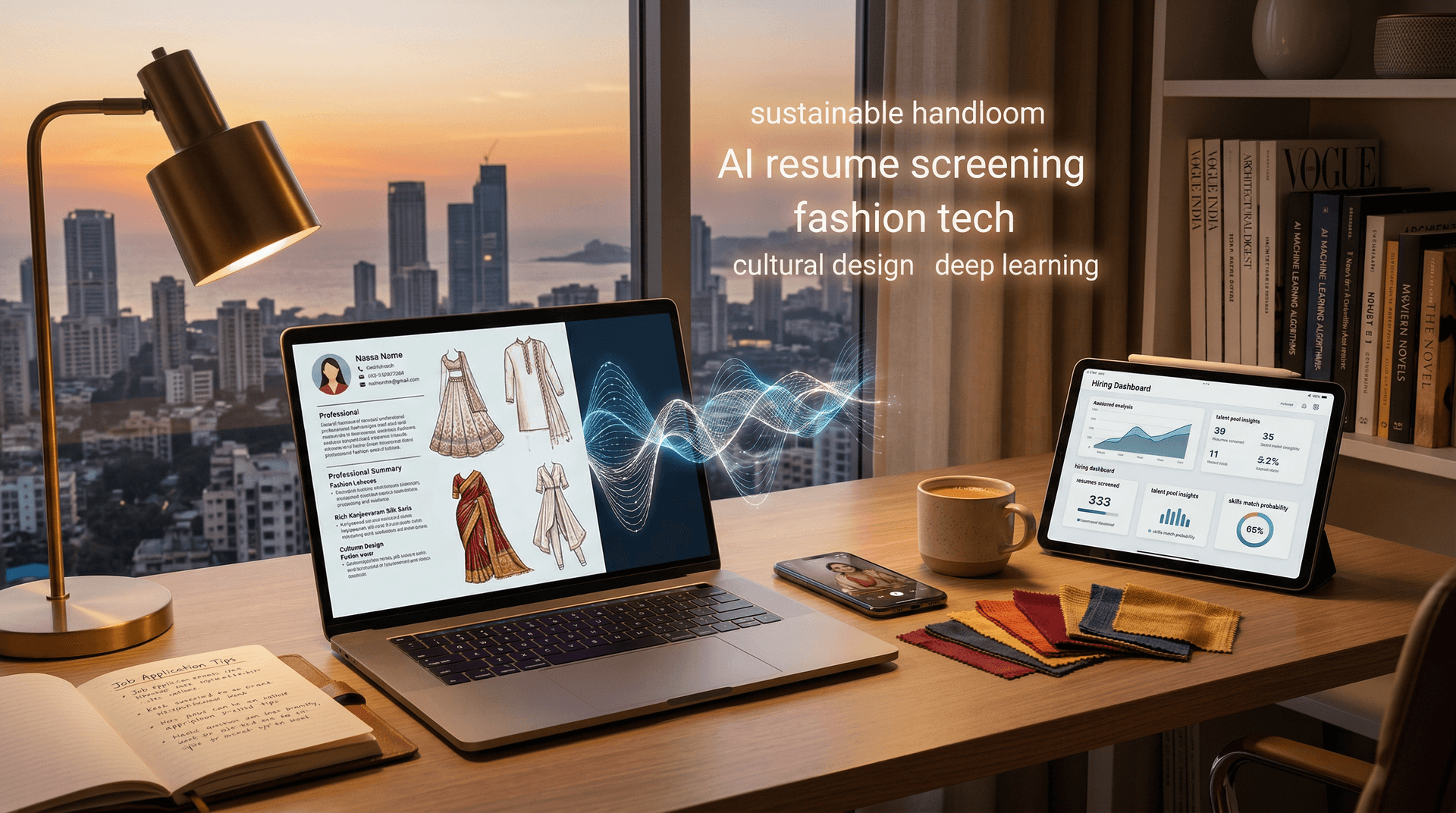
Applicant Tracking Systems (ATS) demand precise keywords like "sustainable handloom" or "kanjeevaram silk weaves." Format errors cause instant rejections.
Cultural mismatches compound issues. Resumes featuring Bollywood portfolios or Diwali wear clash with Western AI's preference for runway metrics and sales data.
Men's fusion wear surges. Brands like Bombay Shaving Company use AI hiring. Optimize for terms like "kurta fusion design" and "blockprint techniques."
Proven Strategies to Pass AI Resume Filters
Mirror job descriptions with exact keywords. Tools like Jobscan ($49 USD/month) achieve 80%+ match rates, boosting pass rates significantly.
Use simple PDFs under 2MB. Employ bullet points: "Led Chanderi silk project, increased sales 25%."
Quantify achievements: "Designed 50 lehengas for wedding season, generated INR 5 lakh (USD 6,000) revenue."
Highlight tech skills. Proficiency in CLO 3D or AI design tools appeals to labels like Sabyasachi and Raw Mango.
Financial Strategies for Fashion Job Seekers
Invest in premium platforms. LinkedIn Premium costs INR 1,500/month (USD 18) and lifts profile visibility 40% (platform data, April 2026).
Nykaa and Ajio prioritize ATS-friendly resumes. Festive hiring peaks October-February, driving 30% volume increase (FDCI data).
Track GST implications for freelancers. Wedding season projects often exceed INR 10 lakh thresholds, requiring compliance.
AI hiring market grows to $4.5 billion USD by 2027 (Gartner). Indian firms capture 10% share via PLI scheme incentives for tech adoption.
Regional Keyword Tips for Indian Applicants
Mumbai candidates stress fusion kurtas and bandhani prints. Chennai tailors emphasize kanjeevaram and Maheshwari weaves. Delhi focuses on Banarasi silks and zari work.
FDCI Lakme Fashion Week uses AI for portfolio screening. Optimize Behance profiles with weave-specific terms like "Pochampally ikat."
Eid and Diwali spur 30% hiring spikes (CMAI reports, 2026). CMAI projects textile exports hit INR 50,000 crore with skilled hires.
Future Impact of Connecticut AI Resume Bill
The Connecticut AI Resume Bill sets U.S. transparency standards. California plans mandates by June 2026. The EU AI Act enforced disclosures since 2025.
Indian brands adapt proactively. Sabyasachi trains AI on diverse datasets to minimize bias (company statement).
South Asia's fashion talent pool expands 15% annually (McKinsey, 2026). Professionals blend creativity with AI literacy for global edge.
The bill empowers optimized strategies amid rising tech in hiring.