Mount Sinai launched the AI CPAP Predictor on April 12, 2026. This machine learning tool predicts cardiovascular risk reduction from CPAP therapy in obstructive sleep apnea (OSA) patients. It analyzes over 40,000 electronic health records for 85% accuracy, per Mount Sinai.
OSA Burden in South Asia
OSA affects 13% of Indian adults, according to a 2026 Indian Council of Medical Research (ICMR) study. South Asians face elevated risks due to central obesity. Untreated OSA leads to cardiovascular issues in 50% of cases, ICMR data shows.
Urban centers like Mumbai and Delhi see rising diagnoses. Air pollution and sedentary jobs contribute, notes NITI Aayog's April 2026 report. CPAP reduces heart events by 30%, but adherence remains at 40%.
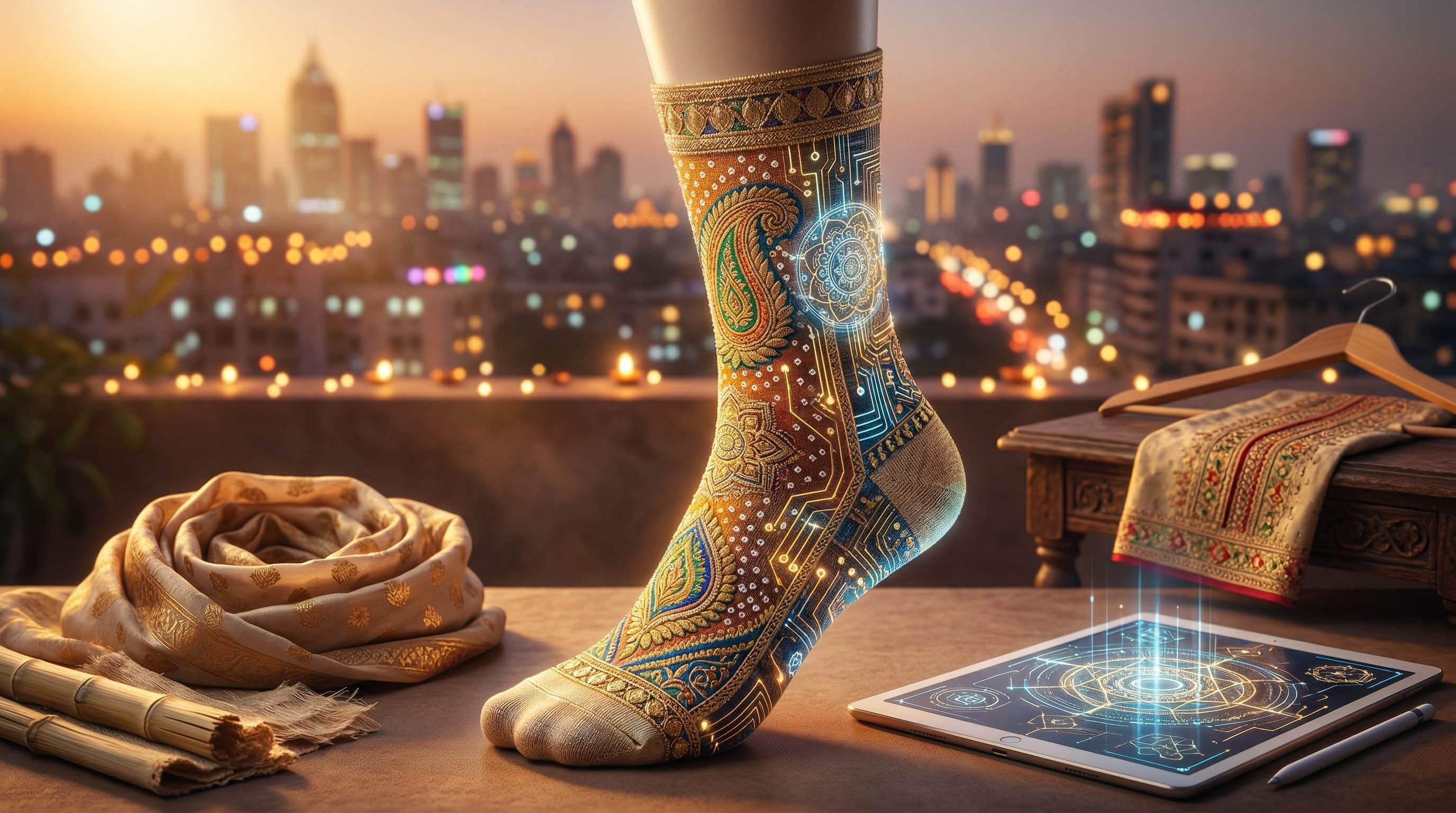
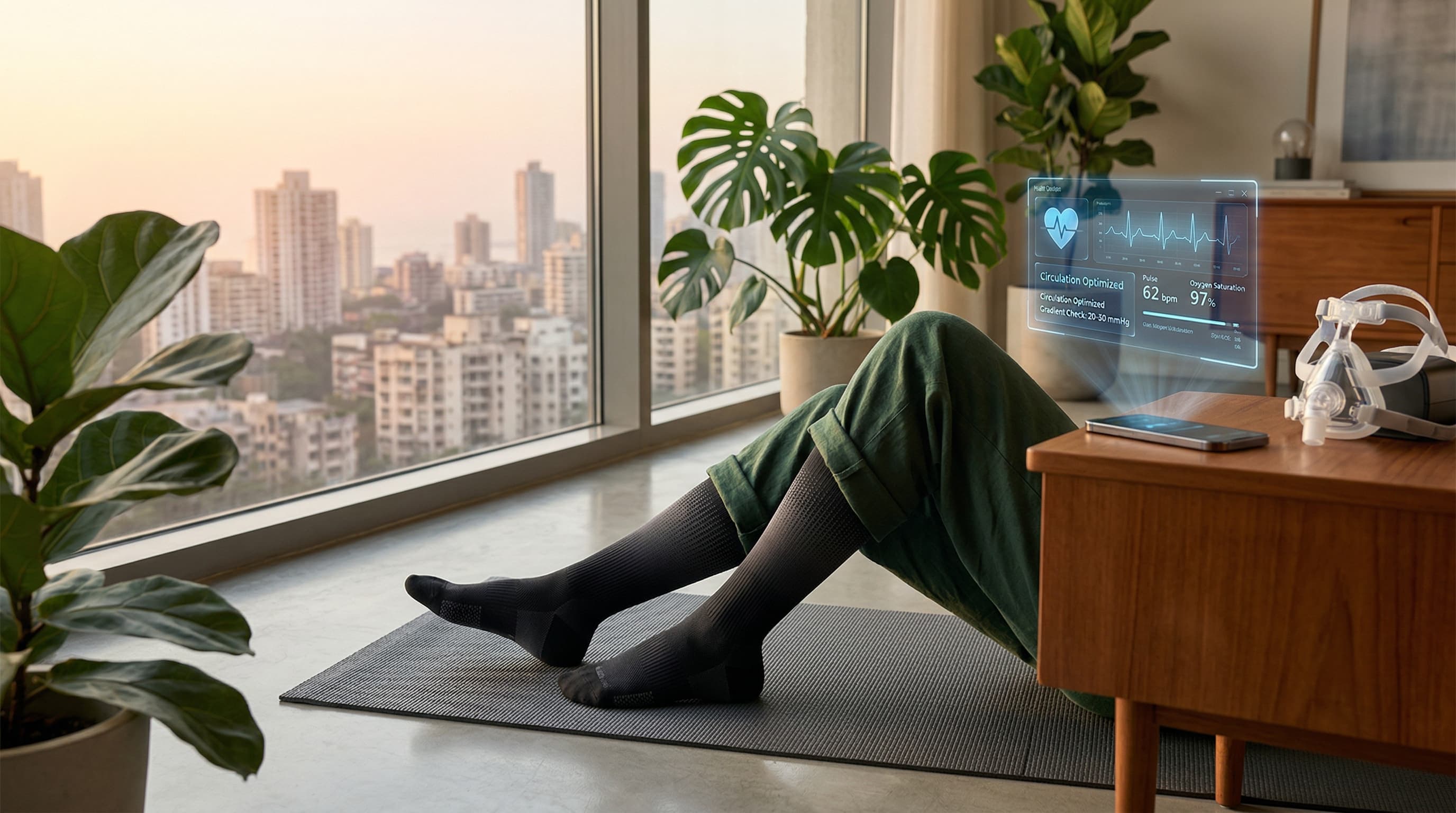
Compression socks enhance circulation during sleep. They reduce edema from OSA-related heart strain. Indian brands position them as fashion-health hybrids.
AI CPAP Predictor Fuels Demand
The AI CPAP Predictor personalizes therapy outcomes and builds trust. Doctors combine it with wearables like compression socks. Indian e-commerce sales rose 28% in Q1 2026, RedSeer Consulting reports.
Myntra hit INR 120 crore ($1.4 million USD) in compression sock revenue this quarter. Ajio achieved 22% growth. Premium models at INR 1,500 ($18 USD) deliver 20-30 mmHg gradient compression via nylon-spandex circular knits with 70-denier breathable yarns.
SockTown's AeroFlow socks target OSA users at INR 999 ($12 USD) with 20-30 mmHg compression. The brand sold 50,000 units since January, per company data.
Tech Innovations in Sleep Fashion
Fashion tech incorporates machine learning. Algorithms suggest sock pressures from AI health data. Mumbai's SleepStyle app uses smartphone scans for OSA-optimized calf fits.
Bangalore users report 15% higher CPAP adherence with matched socks, SleepStyle pilot data shows. Blockchain verifies authenticity against counterfeits. Ethereum NFTs track premium nylon-cotton batches.
Market Investments Surge
India's compression wear market hits INR 650 crore ($78 million USD) in 2026, KPMG India forecasts. Venture capital invested INR 200 crore ($24 million USD) in health-fashion startups last quarter.
Fintech aids exports. XRP at $1.33 USD enables cross-border payments. BNB at $593.93 USD powers D2C sites like Myntra. The sector eyes $100 million USD valuation by 2027.
Designers Tailor for Local Climates
Delhi designer Riya Kapoor debuted CPAP-companion socks at FDCI Summer 2026. Her bamboo-silk knits handle humidity at INR 2,200 ($26 USD) with 15-denier moisture-wicking sheers.
Chennai offers tropical cotton seamless knits. Bangalore's TechSox partners with IIT on sensor-embedded socks. These monitor circulation for AI CPAP Predictor models at INR 3,500 ($42 USD).
Men's lines target wedding season. OSA impacts South Asian men more severely, AIIMS Delhi data indicates. Brands release compression kurtas and socks from October to February.
Sustainability Boosts Adoption
Tamil Nadu weavers produce handloom compression socks from organic cotton. They cut carbon emissions 40% versus synthetics, CSIR reports. Prices start at INR 800 ($9.60 USD).
Myntra's sustainable filters lift sales 30%. Mumbai and Colombo millennials favor ethical options during festive demand.
India's Sleep Fashion Future
The AI CPAP Predictor leads innovation. Indian firms adapt it with local data via PLI schemes. By Diwali 2026, AI-driven sock subscriptions launch at INR 500 ($6 USD) monthly.
This fusion positions South Asia as a sleep fashion leader. Patients secure heart protection. Brands supply functional, festive-ready textiles.