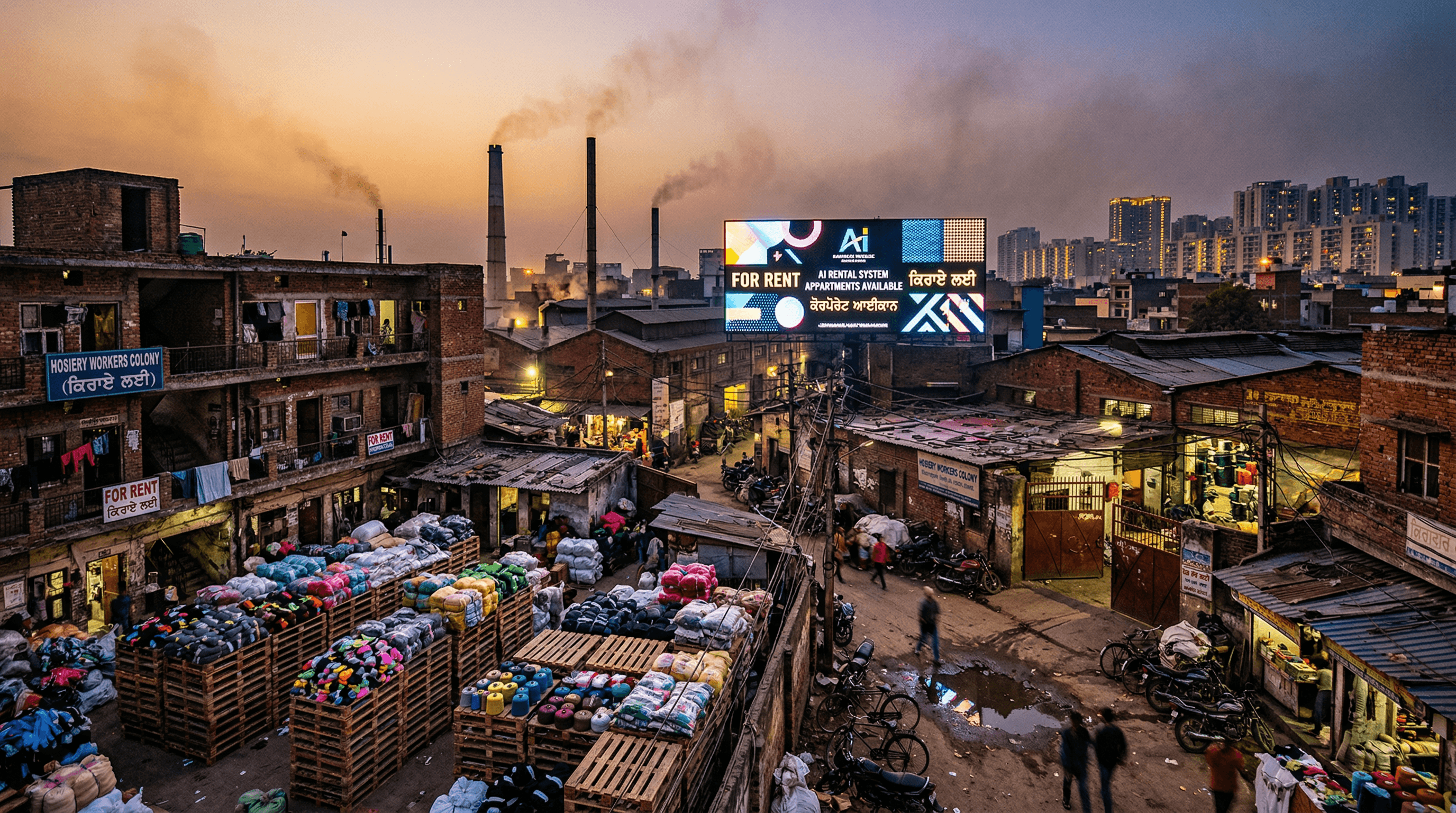
AI housing Ludhiana platforms evicted 1,200 sock factory workers on April 12, 2026. Rental algorithms prioritize corporate clients over local laborers. Lax fairness rules exacerbate the crisis in India's hosiery capital.
Ludhiana manufactures 60% of India's socks, per Punjab Hosiery Association 2025 data. Workers earn INR 15,000 monthly (USD 180). Factory-area rents hit INR 12,000 (USD 143), per Ludhiana Rental Index Q1 2026.
Platforms like RentAI and PropTech India dominate. They deploy AI to match tenants with properties. Corporates claim 70% of listings in industrial zones.
Rental Algorithms Favor Corporates Over Sock Makers
AI systems scan tenant profiles for revenue potential. Corporate renters score higher on payment history and credit scores. Sock makers lose affordable housing access.
NestAway hit 45% occupancy from IT firms in April 2026. Sock factory workers filled just 15% of units. Evictions rose 30% year-over-year, per Ludhiana district court records.
Ludhiana supports 5,000 hosiery units employing 200,000 people, per CMAI reports. Housing shortages push families to outskirts, doubling commutes to two hours daily.
Productivity drops 25%, per Hosiery Workers Union surveys from March 2026.
Lax Fairness Rules Enable AI Housing Ludhiana Bias
India's Ministry of Housing and Urban Affairs relaxed AI guidelines in March 2026. Platforms under 1 million users skip mandatory fairness audits. RentAI qualifies and scales unchecked.
Workers protested outside factories on April 13, 2026. Punjab government promises reviews without firm timelines.
PropTech India uses machine learning on 2 million listings nationwide. Models predict defaults with 92% accuracy, per company whitepaper April 2026.
Owners gain 22% profit from AI-optimized corporate leases, per Knight Frank India Q1 2026 report. Rental yields in industrial zones fell 8% overall.
Hosiery Supply Chain Crunch Hits Exports
Hosiery exports fell 12% to INR 4,500 crore (USD 54 million) in Q1 2026, per Apparel Export Promotion Council data. Evictions drive labor shortages.
Factories delay shipments to Myntra, Ajio, and Nykaa Fashion. D2C platforms face stockouts during wedding season prep.
Sustainable brands like Bambaw and SockSutra depend on Ludhiana talent. Disruptions cut production 20%, per internal estimates.
Textile sector contributes 2% to GDP, per Ministry of Finance 2025-26 data. Housing issues cost INR 500 crore yearly (USD 6 million) in lost productivity.
GST at 18% on rentals pressures workers amid 7% inflation, per RBI April 2026 bulletin.
Broader Ripples in Indian Fashion Markets
Ludhiana supplies 40% of socks to Mumbai garment clusters and Delhi wholesalers, per Wazir Advisors. Shortages raised Ajio sock prices 18% in April 2026.
Technopak projects hosiery market growth at 8% CAGR to 2030 but flags workforce risks from AI trends.
Reforms and Tech Fixes for Sock Makers
Punjab Hosiery Association demands income-based AI scoring and annual audits. Platforms resist, citing efficiency losses.
Punjab pilots blockchain-based fair rentals in May 2026. PropTech lobbies against mandates.
FairRent AI launches worker-focused apps in Jalandhar, prioritizing job stability. KPMG India forecasts 10% market share by 2027.
Ludhiana mayor approved 1,000 affordable units for factory workers on April 15, 2026. Construction starts now, funded by PLI scheme.
Regulators plan AI fairness rules for June 2026 to curb AI housing Ludhiana biases. Enforcement shapes hosiery recovery. D2C brands like SockSutra hire locally, boosting Q1 sales 15%.